IMaging, BIOLOGY, mechanical and electrical design
Coral Imaging
My interest in coral reefs and coral imaging resonated with Professor Gruev’s interests in underwater localization. To make an effort towards collecting underwater data, I began my senior thesis, co advised by Professor Becky Fuller.
The background behind this project covers a few different bases. On one hand, both Professor Gruev and I have in interest in coral bleaching prediction. Multispectral imaging has seen use in the past, so setting up an experiment with our lab’s cameras and imaging corals as they’re exposed to different conditions could yield data on bleaching indicators.
The other hope was to expand on our current efforts in underwater localization. Collecting underwater data out in the field is usually quite difficult. Any data that could be collected in the lab, even under simulated environments, could potentially aid in our efforts. Personally, I’m interested to see if corals have spectral “fingerprints” that allow animals to visually use them as landmarks.
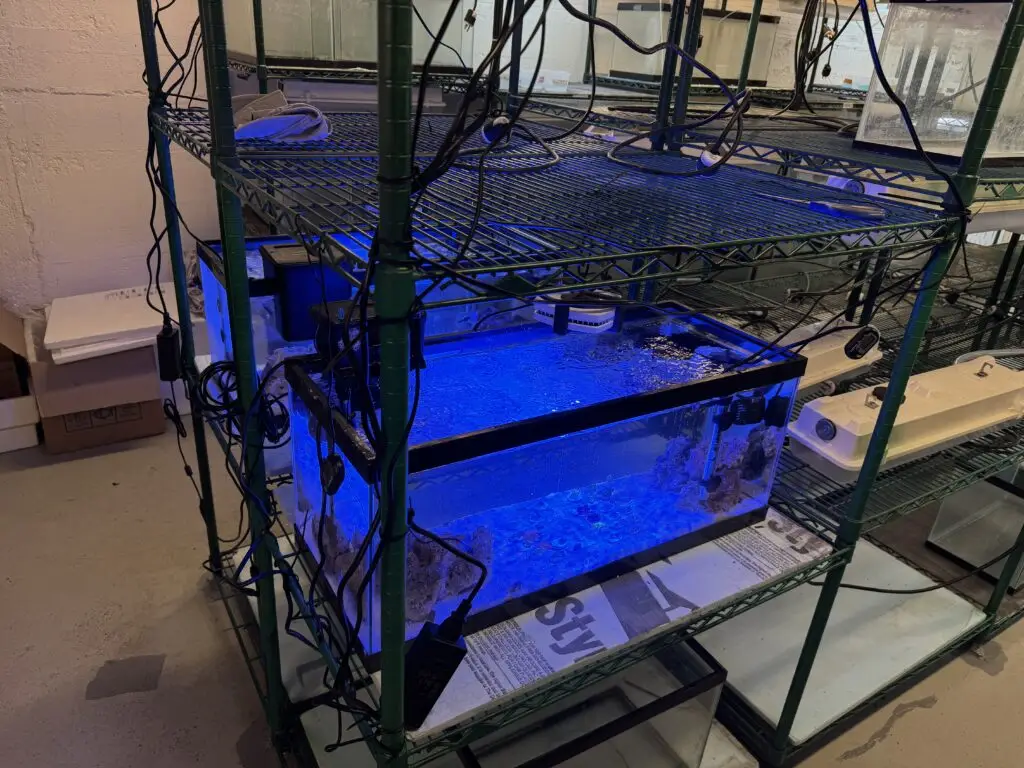
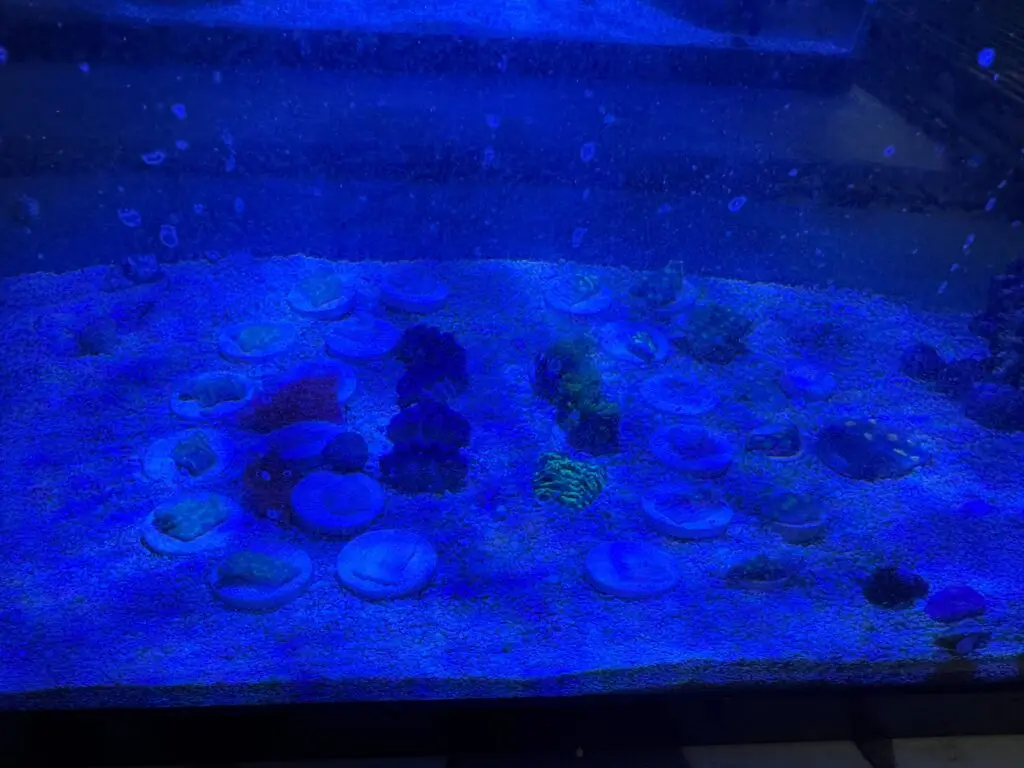
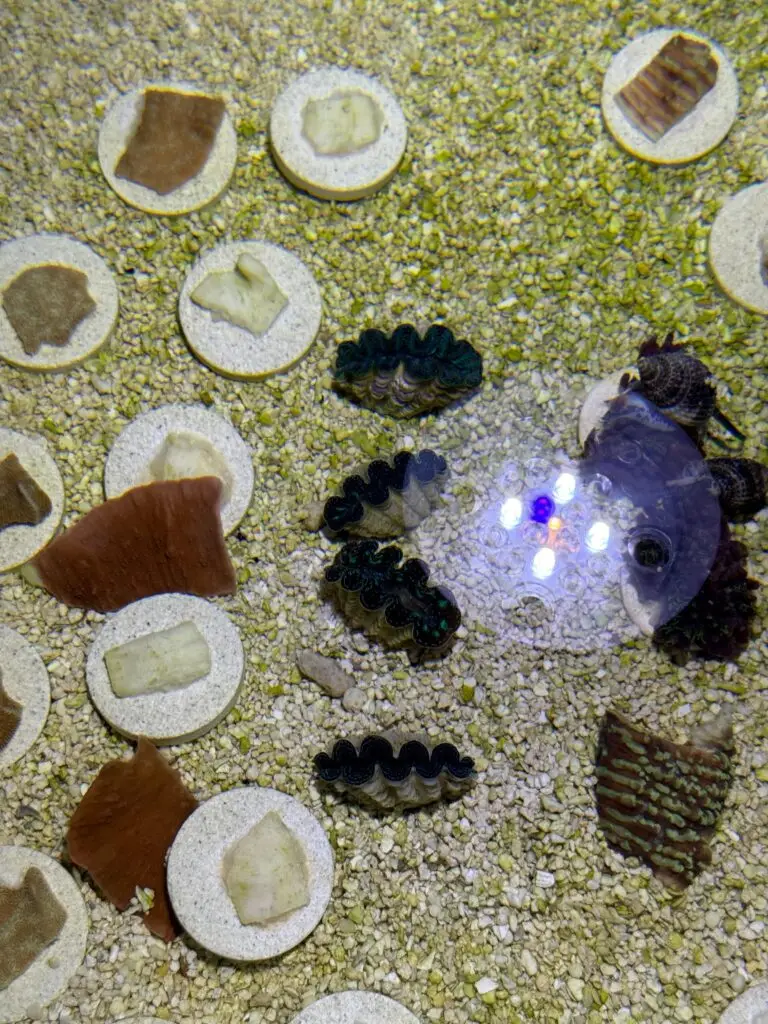
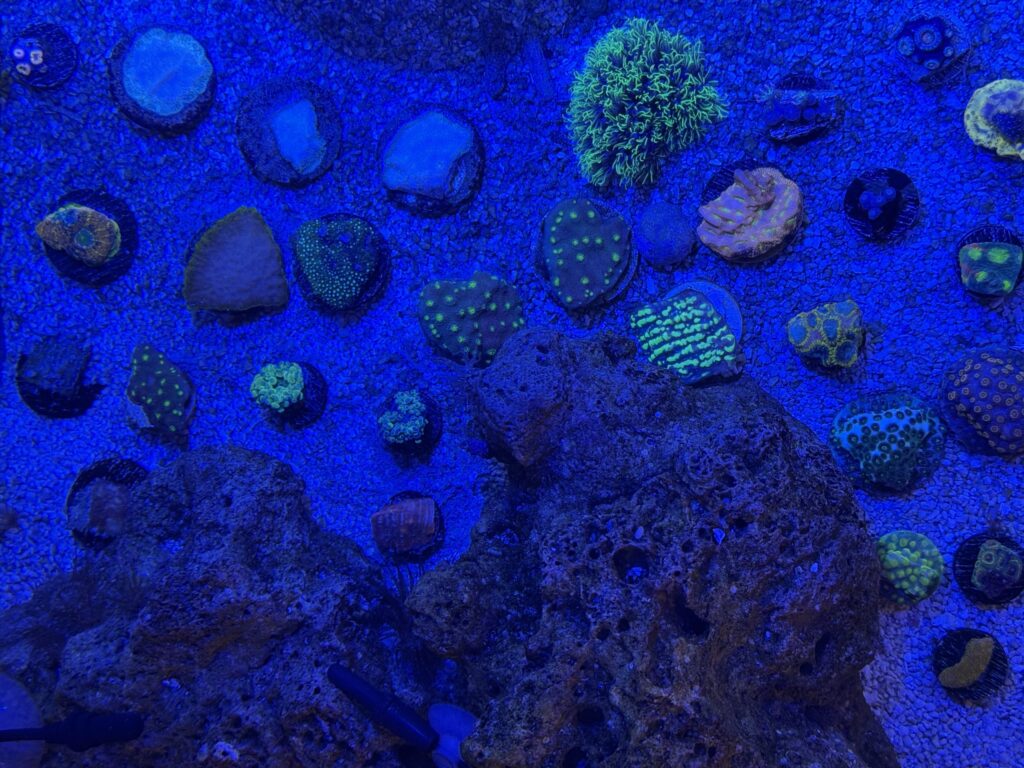
Corals have a very interesting fluorescence in a lot of different species. In particular, you can see one the chalice corals almost glowing a neon green. These fluorescent patterns are unique to each coral I saw, and the color and vibrancy differs between each one. From an identification standpoint, measuring the spectral signature of the corals under fluorescent conditions and in normal lighting could yield some interesting results.
I began to notice that corals like Green Star Polyps (GSP), were very sensitive to water quality and lighting conditions. Anything moving near them usually caused them to retract as well. I’ve read that fish schooling behavior can be used as a bioindicator, clams’ closing frequency has been used as water quality indicator. Coral polyp extension seems to be a natural next step, though different species seem to exhibit different cycles of polyp extension.
In the time since, I’ve been working on stabilizing conditions in each tank, and combating a myriad of early tank problems, notably cyanobacteria, nuisance algae outbreaks, montipora eating nudibranch outbreak, and nutrient issues. I’ve also split each tank into roughly 3 zones: a high light zone for macroalgae and my clams, a medium light zone for corals, and a low light zone that’s started growing small sponges.
Water testing is pretty time consuming, but I’ve been doing it on a weekly basis to keep track of nutrients and minerals. Most testers are not very precise, but can give you an idea of your general trends. I’ve gotten a lot of personal experience from this experience; corals are very unforgiving when it comes to conditions changing and I’ve lost a fair share already. However, with things stabilizing, I’ve been able to automate and create redundancies to some extent. I’ve gotten good growth out of some of my corals, with new polyps, skeleton growth and my clams have also shown signs of shell growth.
The next step is the imaging setup. As of now, 2 smaller test tanks have been setup and I am designing a mechanical and electrical system that can automate the daily imaging process. Reef tanks are a very slow process and most tanks are not ready or established until after 6 months, so it’s been difficult trying to push this project forward. But the results speak for themselves, I’m quite happy with the little slice of the ocean I’ve been able to create in Illinois, and should be on track to collect data to share next semester.
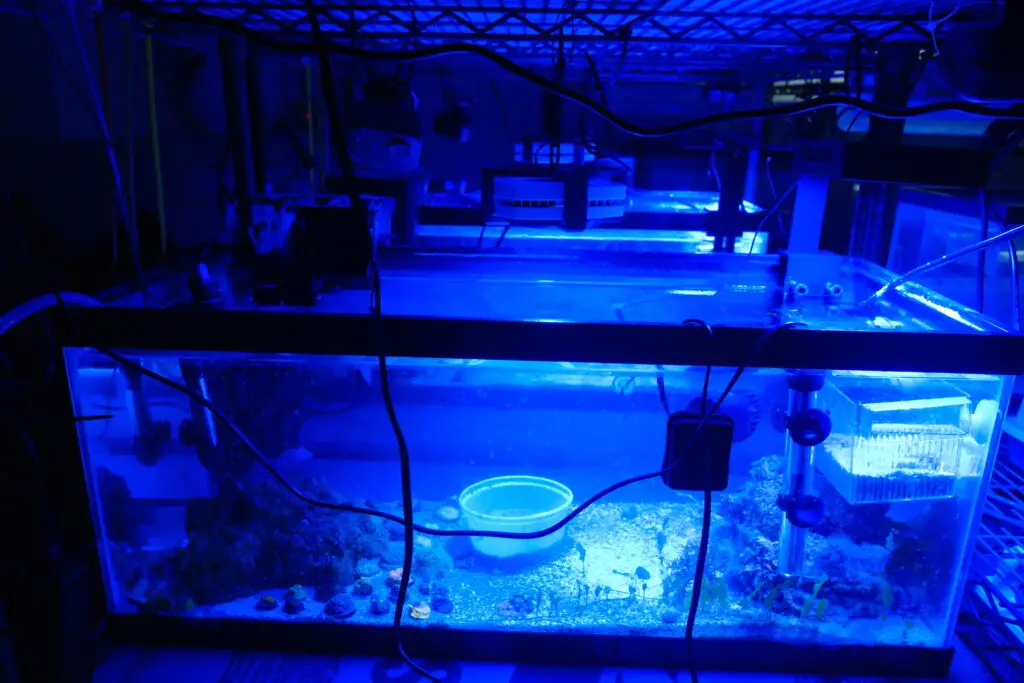
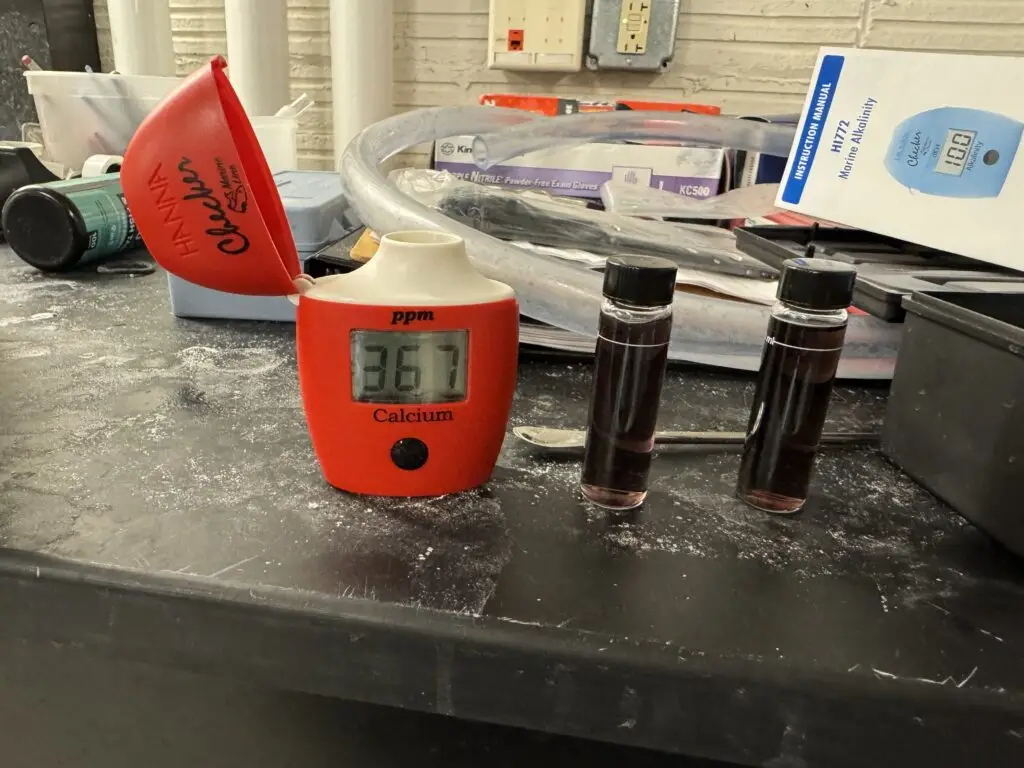
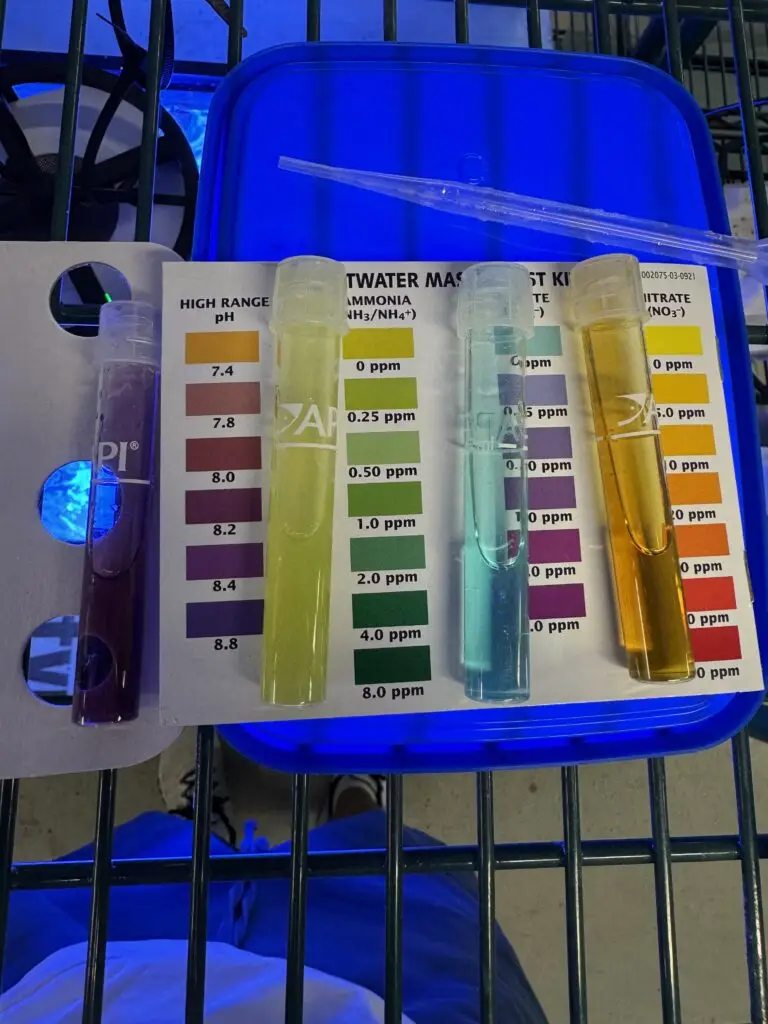
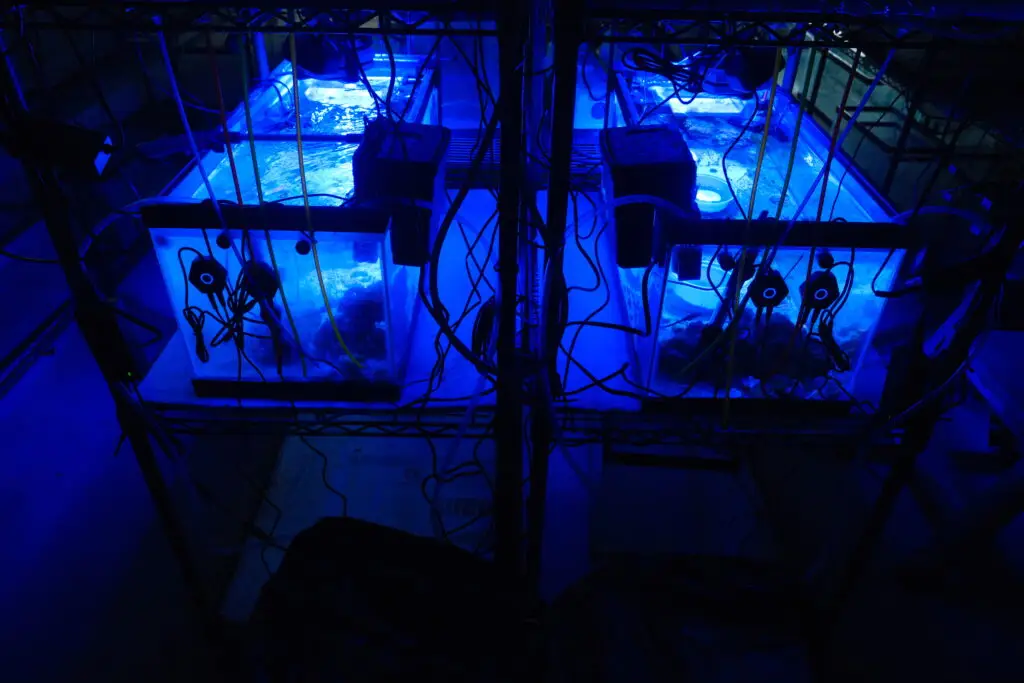
Here are some extra images of the new setup, I’ve been working on setting up some degree of automation. There are already several Inkbird controllers in place just in case something goes wrong. The lights are on timer, and the top offs hold enough water to maintain the tanks for about 2 weeks. I’m currently setting up the dosing pumps too. With a set of smart plugs and security cameras, I can take a look into the tanks at any time just in case.
The tank pictured here is my most stable one right now. You can still see some algae on the sand, which I believe is normal. You can see that a lot of the corals are still not fully extended, I’m not entirely sure what the reasons are, they seem to have a mind of their own. I’m very interested in studying them further over time.